
I passed a van the other day with a custom paint job that advertised the name of a company -
Budget Generators. My first thought upon seeing the van was that I would love to have someone generate a budget so my family could take a trip to a tropical island for spring break this year (This is the way my wordplay-loving, sarcastic mind operates).
Unfortunately, that is not the company's line of work.
Here is the information I found when I googled the name of the company:
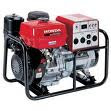
Merchant Information
Generator Systems, Home, Installation, Natural Gas, Whole
Main Website,
Hours: 24/7
Payment: cash/check
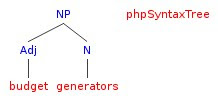
The name of the company can be interpreted as (1) a noun phrase made up of an adjective plus a noun, or (2) a noun phrase consisting of a noun plus noun compound word.
(1) 
(2)

It is the multiple meanings of the words "budget" and "generator" that lead to this
ambiguity. From the
thefreedictionary.com:
generator - a machine that converts mechanical energy into electricity to serve as a power source for other machines.
or
generator - someone who originates or causes or initiates something; "he was the generator of several complaints".
budget n. - allowance, means, funds, income, finances, resources, allocation
or
budget adj. - inexpensive, economy, bargain, sale, reduced, keen, reasonable, low-priced, low-cost, cut-price, economical, cheapo
What kind of budget generator would you prefer?


 Serial, cereal commas -
 I passed a van the other day with a custom paint job that advertised the name of a company - Budget Generators. My first thought upon seeing the van was that I would love to have someone generate a budget so my family could take a trip to a tropical island for spring break this year (This is the way my wordplay-loving, sarcastic mind operates).
