obloquy
n pl -quies
1. defamatory or censorious statements, esp when directed against one person
2. disgrace brought about by public abuse
[from Latin obloquium contradiction, from ob- against + loqui to speak]
Definition from The Free Dictionary
Word submitted by reader korean translator
All readers are invited to submit words - any type of words. Words that are fun to say, words that are out of the ordinary, words that are ordinary but have weird definitions...you name it, they are all welcome. Please submit via the comments button.
Showing posts with label word definitions. Show all posts
Showing posts with label word definitions. Show all posts
Monday, March 28, 2011

Monday, March 21, 2011
Word Up Weekly
What to do now that "Z" has come and gone...

Let the fun begin.
Please submit words via the comment button.
Image credits.
Thursday, January 20, 2011
Correction: Washington Post's Mensa Invitational
Shame on me for posting something without checking the facts first.
According to the American Mensa website, "Since 2005 or earlier, the "Mensa Invitational" has been suspected to be a hoax but no confirmation has ever been made prior to this. So we're here to debunk this urban legend."
"American Mensa, nor any other Mensa entity, has ever been affiliated with The Washington Post's "Style Invitational" column and/or its contests, to the best of our knowledge. It wouldn't surprise us if many of our members have entered the contests — and perhaps even have won — but that would be the limit of the interaction."

For those of you who have not yet seen the annual "contest" results, here they are:
1. Cashtration (n.): The act of buying a house, which renders the subject financially impotent for an indefinite period of time.
2. Ignoranus: A person who's both stupid and an asshole.
3. Intaxication: Euphoria at getting a tax refund, which lasts until you realize it was your money to start with.
4. Reintarnation: Coming back to life as a hillbilly.
5. Bozone ( n.): The substance surrounding stupid people that stops bright ideas from penetrating. The bozone layer, unfortunately, shows little sign of breaking down in the near future.
6. Foreploy: Any misrepresentation about yourself for the purpose of getting laid.
7. Giraffiti: Vandalism spray-painted very, very high.
8. Sarchasm: The gulf between the author of sarcastic wit and the person who doesn't get it.
9. Inoculatte: To take coffee intravenously when you are running late.
10. Osteopornosis: A degenerate disease. (This one got extra credit.)
11. Karmageddon: It's like, when everybody is sending off all these really bad vibes, right? And then, like, the Earth explodes and it's like, a serious bummer.
12. Decafalon (n.): The gruelling event of getting through the day consuming only things that are good for you.
13. Glibido: All talk and no action.
14. Dopeler Effect: The tendency of stupid ideas to seem smarter when they come at you rapidly.
15. Arachnoleptic Fit (n.): The frantic dance performed just after you've accidentally walked through a spider web.
16. Beelzebug (n.): Satan in the form of a mosquito, that gets into your bedroom at three in the morning and cannot be cast out.
17. Caterpallor ( n.): The colour you turn after finding half a worm in the fruit you're eating.
18. Vowel movement: The inevitable verbal diarrhea that spews from ones' mouth when they have nothing significant to say.
Supply an alternate meanings for common words
1. coffee (n.): The person upon whom one coughs.
2. flabbergasted (adj.): Appalled by discovering how much weight one has gained.
3. abdicate (v.): To give up all hope of ever having a flat stomach.
4. esplanade (v.): To attempt an explanation while drunk.
5. willy-nilly (adj.): Impotent.
6. negligent(adj.): Absent-mindedly answering the door when wearing only a nightgown.
7. lymph (v.): To walk with a lisp.
8. gargoyle (n.): Olive-flavoured mouthwash.
9. flatulence (n.): Emergency vehicle that picks up someone who has been run over by a steamroller.
10. balderdash (n.): A rapidly receding hairline.
11. testicle (n.) A humorous question on an exam.
12. rectitude (n.): The formal, dignified bearing adopted by proctologists.
13. pokemon (n.): A Rastafarian proctologist.
14. oyster (n.) A person who sprinkles his conversation with Yiddishisms.
15. Frisbeetarianism (n.): The belief that, after death, the soul flies up onto the roof and gets stuck there.
16. circumvent (n.): An opening in the front of boxer shorts worn by Jewish men.
And here is a link to "The Style Invitational" humor column at the Washington Post.
Back in January of 2009 I received an email that included the results of Washington Post's Mensa Invitational. There were two categories in this "contest" and I wrote one post about each of the categories. See here and here.
There is no such thing as Washington Post's Mensa Invitational.
It has just come to my attention that each January when dictionaries and other entities release their "Word of the Year" lists, an email announcing the winners of Washington Post's Mensa Invitational circulates. Each year this list of winners is, if not identical, pretty darn close.
According to the American Mensa website, "Since 2005 or earlier, the "Mensa Invitational" has been suspected to be a hoax but no confirmation has ever been made prior to this. So we're here to debunk this urban legend."
"American Mensa, nor any other Mensa entity, has ever been affiliated with The Washington Post's "Style Invitational" column and/or its contests, to the best of our knowledge. It wouldn't surprise us if many of our members have entered the contests — and perhaps even have won — but that would be the limit of the interaction."
For those of you who have not yet seen the annual "contest" results, here they are:
Take any word from the dictionary, alter it by adding, subtracting, or changing one letter, and supply a new definition
1. Cashtration (n.): The act of buying a house, which renders the subject financially impotent for an indefinite period of time.
2. Ignoranus: A person who's both stupid and an asshole.
3. Intaxication: Euphoria at getting a tax refund, which lasts until you realize it was your money to start with.
4. Reintarnation: Coming back to life as a hillbilly.
5. Bozone ( n.): The substance surrounding stupid people that stops bright ideas from penetrating. The bozone layer, unfortunately, shows little sign of breaking down in the near future.
6. Foreploy: Any misrepresentation about yourself for the purpose of getting laid.
7. Giraffiti: Vandalism spray-painted very, very high.
8. Sarchasm: The gulf between the author of sarcastic wit and the person who doesn't get it.
9. Inoculatte: To take coffee intravenously when you are running late.
10. Osteopornosis: A degenerate disease. (This one got extra credit.)
11. Karmageddon: It's like, when everybody is sending off all these really bad vibes, right? And then, like, the Earth explodes and it's like, a serious bummer.
12. Decafalon (n.): The gruelling event of getting through the day consuming only things that are good for you.
13. Glibido: All talk and no action.
14. Dopeler Effect: The tendency of stupid ideas to seem smarter when they come at you rapidly.
15. Arachnoleptic Fit (n.): The frantic dance performed just after you've accidentally walked through a spider web.
16. Beelzebug (n.): Satan in the form of a mosquito, that gets into your bedroom at three in the morning and cannot be cast out.
17. Caterpallor ( n.): The colour you turn after finding half a worm in the fruit you're eating.
18. Vowel movement: The inevitable verbal diarrhea that spews from ones' mouth when they have nothing significant to say.
Supply an alternate meanings for common words
1. coffee (n.): The person upon whom one coughs.
2. flabbergasted (adj.): Appalled by discovering how much weight one has gained.
3. abdicate (v.): To give up all hope of ever having a flat stomach.
4. esplanade (v.): To attempt an explanation while drunk.
5. willy-nilly (adj.): Impotent.
6. negligent(adj.): Absent-mindedly answering the door when wearing only a nightgown.
7. lymph (v.): To walk with a lisp.
8. gargoyle (n.): Olive-flavoured mouthwash.
9. flatulence (n.): Emergency vehicle that picks up someone who has been run over by a steamroller.
10. balderdash (n.): A rapidly receding hairline.
11. testicle (n.) A humorous question on an exam.
12. rectitude (n.): The formal, dignified bearing adopted by proctologists.
13. pokemon (n.): A Rastafarian proctologist.
14. oyster (n.) A person who sprinkles his conversation with Yiddishisms.
15. Frisbeetarianism (n.): The belief that, after death, the soul flies up onto the roof and gets stuck there.
16. circumvent (n.): An opening in the front of boxer shorts worn by Jewish men.
And here is a link to "The Style Invitational" humor column at the Washington Post.
Wednesday, November 10, 2010
Failure to Translate
Following is a list of words that do not have a direct (word for word) translation to English:
 L’esprit de l'escalier: (French) The feeling you get after leaving a conversation, when you think of all the things you should have said. Translated it means “the spirit of the staircase.”
 L’esprit de l'escalier: (French) The feeling you get after leaving a conversation, when you think of all the things you should have said. Translated it means “the spirit of the staircase.”
.
Waldeinsamkeit: (German) The feeling of being alone in the woods.
Meraki: (Greek) Doing something with soul, creativity, or love.
Forelsket: (Norwegian) The euphoria you experience when you are first falling in love.
Gheegle: (Filipino) The urge to pinch or squeeze something that is unbearably cute.
Pochemuchka: (Russian) A person who asks a lot of questions.
Pena ajena: (Mexican Spanish) The embarrassment you feel watching someone else’s humiliation.
Cualacino: (Italian) The mark left on a table by a cold glass.
Ilunga: (Tshiluba, Congo) A person who is ready to forgive any abuse for the first time, to tolerate it a second time, but never a third time.
Saudade (sow-da-jee): (Portugese, Galician) the feeling one gets when realizing something one once had is lost and can never be had again
Sgriob: (Gaelic) The itchiness that overcomes the upper lip just before taking a sip of whisky.
From dminkin.tumblr
Monday, August 2, 2010
Polysemy Want a Cracker

As mentioned in a previous post about polysemy, the reference is to a single word with different senses of the same basic meaning. Polysemes are also distinguished from homonyms because they are etymologically related.
Following is a list of senses for the definition of the word "cracker" from the Oxford English Dictionary (see 8. a. and 9. a.):
One who or that which cracks (in any of the senses of the vb.).
1. gen.
2. esp. A boaster, braggart; hence, a liar.
3. familiar or colloq. A lie.
4. U.S. a. A contemptuous name given in southern States of N. America to the ‘poor whites’; whence, familiarly, to the native whites of Georgia and Florida. Also attrib. According to some, short for CORN CRACKER; but early quots. leave this doubtful.
b. attrib.; the Cracker State, Georgia.
5. A local name for the Pintail Duck (Dafila acuta), and the Corn-crake (Crex pratensis).
6. a. A kind of firework which explodes with a sharp report or a succession of sharp reports.
b. (In full cracker bon-bon.) A bon-bon, or small parcel of sweets, etc., containing a fulminant, which explodes when pulled sharply at both ends. attrib., as cracker-motto, -paper, -poetry, -rhyme.
c. An attachment to the end of a whip-lash by which a cracking sound can be produced. U.S., Austral. and N.Z.
7. A pistol. Obs. slang. (Cf. BARKER 4.)
8. a. An instrument for cracking or crushing something; a crusher; spec. in pl. nut-crackers.
b. humorously (in pl.). The teeth.
c. A cracking plant (see CRACK v. 23).
9. a. A thin hard biscuit. (Now chiefly in U.S.)
b. attrib. and Comb., as cracker-bag, -peddler; cracker-hash, a sailors' hash of biscuits and meat; so cracker-stew.
10. pl. (S. Africa). (See quot.)
11. slang. a. A ‘cracking’ or ‘rattling’ pace.
b. A break-down, a smash: cf. CRACK v. 15.
c. A pound(-note). Austral. and N.Z. slang.
Hence (nonce-wds.) cracker v. trans., to pelt with crackers. crackeress, a female cracker. crackery, crackers collectively.
Image from A Way with Words
Monday, May 31, 2010
Props for a Vocabulary Update
Back in February of this year I posted about the word props and an observant reader, Joseph Christina RN, sent me the following which I thought I would share.
I was recently asked the origin of the phrase “giving props” to someone. The general attribution on the net is to rappers in the 80’s. Some further digging indicated that the phrase came into broader use after Aretha Franklin used the phrase in her cover of “Respect” in 1967. Although the song was written and released by Otis Redding in 1965, Aretha added the line:
“I'm about to give you all of my money - And all I'm askin' in return, honey - Is to give me my props”

Apparently, I’m not the first person trying to track this down. Below is an excerpt from The New York Times:
Bernard Schneider of Falmouth Foreside, Me., recalled that ''during a recently aired Ed Bradley interview of the artist on '60 Minutes,' he inferred that her artistic plea for propers was for adoration and attention of a sexual nature.''
That torrent of informed correction drove me to J. Redding Ware's 1909 ''Passing English of the Victorian Era,'' which touches lightly on the term as ''erotic.''
Reached during a tour that took her through Washington, Franklin is having none of that. Her use of propers (which many heard as profits ) in the lyric was her own, not in the words originally written and performed by Otis Redding in 1965.
''I do say propers ,'' says the queen of soul. ''I got it from the Detroit street. It was common street slang in the 1960's. The persons saying it has a sexual connotation couldn't be further from the truth. 'My propers ' means 'mutual respect' -- what you know is right.''
The original version of the article is available at http://www.nytimes.com/2002/07/28/magazine/28ONLANGUAGE.html
Aretha’s version of "Respect" was recorded on February 14, 1967, and we have her stating that it was “common street slang” in the Detroit area at that time.
“I'm about to give you all of my money - And all I'm askin' in return, honey - Is to give me my props”
Apparently, I’m not the first person trying to track this down. Below is an excerpt from The New York Times:
Bernard Schneider of Falmouth Foreside, Me., recalled that ''during a recently aired Ed Bradley interview of the artist on '60 Minutes,' he inferred that her artistic plea for propers was for adoration and attention of a sexual nature.''
That torrent of informed correction drove me to J. Redding Ware's 1909 ''Passing English of the Victorian Era,'' which touches lightly on the term as ''erotic.''
Reached during a tour that took her through Washington, Franklin is having none of that. Her use of propers (which many heard as profits ) in the lyric was her own, not in the words originally written and performed by Otis Redding in 1965.
''I do say propers ,'' says the queen of soul. ''I got it from the Detroit street. It was common street slang in the 1960's. The persons saying it has a sexual connotation couldn't be further from the truth. 'My propers ' means 'mutual respect' -- what you know is right.''
The original version of the article is available at http://www.nytimes.com/2002/07/28/magazine/28ONLANGUAGE.html
Aretha’s version of "Respect" was recorded on February 14, 1967, and we have her stating that it was “common street slang” in the Detroit area at that time.
Thank you for sharing Joseph; you deserve props. This was much more information than I came up with during my brief search. Also, I have lived in the Detroit area all of my life and have heard Aretha's version of the song more times than I can count so I am amazed that I never noticed the word before. I must have heard it as a mondegreen.
Wednesday, March 3, 2010
Vocabularians Have More Fun

vocabularian: Someone who gives much or undue attention to words.
If there was ever a doubt, I do believe Monday's post should confirm that I am a die hard vocabularian. Vocabularianism really isn't such a bad thing; after all, I sure am good at entertaining myself with wordplay (and occasionally my family).
Tuesday, February 2, 2010
How to Increase Your Vernacular Vocabulary
If you would like to receive props for your language prowess and you don't want to sound hinky when talking with others, a good way to start increasing your vocabulary is by watching television.
I just heard the word props for the first time while watching the Winter X-Games and the word hinky while watching the props-worthy show Bones.

I just heard the word props for the first time while watching the Winter X-Games and the word hinky while watching the props-worthy show Bones.
The definitions are from Merriam-Webster.com
props:
Etymology: short for proper dues
Date: 1992
1 slang : due "takes pains to give the man his props" — Dan Epstein
2 slang : respect "teachers have to earn their props just like everybody else" — Greg Donaldson 3 slang : credit "at least deserves props for writing a song about something that rings true" — Jim Abbott
2 slang : respect "teachers have to earn their props just like everybody else" — Greg Donaldson 3 slang : credit "at least deserves props for writing a song about something that rings true" — Jim Abbott
hinky:
Etymology: alteration of argot hincty suspicious
Date: 1956
1 slang : nervous, jittery
Date: 1956
1 slang : nervous, jittery
2 slang : suspicious
Friday, January 8, 2010
Flexible Portmanteau Word Formation - Flexitarian
I just read an article about a practice called "flexitarianism" in the January 11, 2010 issue of Newsweek. While the article was indeed quite interesting, the part I found most interesting was the word "flexitarian".
According to thedailygreen.com, the American Dialect Society named the word "flexitarian" the "most useful word of the year" in 2003. The word is defined as a vegetarian who occasionally eats meat.
According to thedailygreen.com, the American Dialect Society named the word "flexitarian" the "most useful word of the year" in 2003. The word is defined as a vegetarian who occasionally eats meat.

The reason I found the word so interesting has to do with the way it was formed.
Considering that the word "vegetarian", according to the Online Etymology Dictionary, is an irregular formation from vegetable (n.) + -arian, as in agrarian, etc. , a first instinct might be to wonder why the word "flexitarian" wouldn't have just been "flexarian" or "flexibarian.
Consider the following list of words that have been formed with the "-arian" suffix:
abecedarian
apiarian
authoritarian
barbarian
celibatarian
disciplinarian
grammarian
libertarian
nuditarian
octogenarian
parlamentarian
riparian
totalitarian
utilitarian
veterinarian
vocabularian
vulgarian
apiarian
authoritarian
barbarian
celibatarian
disciplinarian
grammarian
libertarian
nuditarian
octogenarian
parlamentarian
riparian
totalitarian
utilitarian
veterinarian
vocabularian
vulgarian
From this list, each of the words that include the "t" + "arian" have roots + suffixes that would include the "t" with or without the additional "arian" suffix (ex. authority, liberty, nudity). The same cannot be said for "flexitarian"; there is no word "flexity".
So what gives?
When properly analyzed, "flexitarian" is not formed by taking a root morpheme and adding two suffixes like many of the words from the above list. "Flexitarian" is a portmanteau word. It is a blend of the words "flexible" and "vegetarian".
flexible - flexi
vegetarian - tarian
Wednesday, September 23, 2009
What the...is a Hoomba
A dear friend of mine, who has provided much fodder for this blog (thank you, love), has inspired me with yet another word from her clanolect - 'hoomba'.
I googled the word and came up with only one definition (not hers) from Urban Dictionary which follows -
Hoomba: A "nothing" word used to replace a noun when the appropriate noun cannot be thought of in the amount necessary for conversation.
1) "Hey, grab me that...hoomba"
2) "I was struck on the back of the head with a...hoomba."
I far prefer the definition provided by my friend's clanolect (of which I have become a part, thank you) -
Hoomba: A bonfire poker
Monday, August 3, 2009
Breadcrumb (Verb)
 I recently drove one of my sons to a new camp in Ohio. We followed the directions to the main road for the camp but decided to look for a restaurant to have some lunch before going to the camp. As we drove, it seemed like we were driving in a circle and the restaurant where we ended up was off of the same express way we had just exited (though we couldn't tell if it was the same exit or not). Being unfamiliar with the area, I couldn't decide if we should assume we had driven in a circle and wing it back to the camp or if we should backtrack. I asked my teenage son what he thought and he responded, "I think we should breadcrumb it." I had never heard the word "breadcrumb" used as a verb and I wondered if he heard it on a television show. He claims that this usage just popped into his head at that moment based upon the fairy tale Hansel and Gretel.
I did a quick web search and came up with the following:
Wiktionary
Verb
Infinitive to breadcrumb
1. (transitive) (cooking) To sprinkle breadcrumbs on to food, normally before cooking.
NetLingo
The nickname for a top navigation menu that uses a string of section names to identify where you are.
For example, when searching for cell phone product reviews on CNET.com, you will see the following "breadcrumbs" just beneath the top level navigation:
> Home > Reviews > Cell Phones and Accessories > All Cell Phones
Likened to the practice of leaving breadcrumbs behind you when you go hiking on a new trail or wandering through the wilderness, these top navigation links help you find your way back to where you started by following them in reverse order.
While the NetLingo definition comes close to my son's definition, I still prefer his version as it has a far broader application.
Breadcrumb:
Verb
Infinitive to breadcrumb
1. (transitive) To retrace one's steps, to backtrack.
Example sentence: To avoid getting lost, we breadcrumbed it.
Thank you JJP
Wednesday, June 10, 2009
Portmanteau Furniture a.k.a. Frankenfurniture (Frankenstein + Furniture)
A good friend recently brought an unusual portmanteau word to my attention -
There is a store in Gaylord, Michigan called The Old Spud Warehouse that sells, what they claim to have named, "Frankenfurniture."
The following photos and wording are shown as they appear on The Old Spud Warehouse website:


"It Lives!!!!
FRANKENFURNITURE (noun): a spudword refering to discarded vintage pieces brought to life by combining parts to make useable furniture...
oh so spudly!!!"
Aside from the fact that referring is spelled with two "r"'s and the preferred spelling of usable does not include an "e", what I found interesting is that this website was created in 2007 and since 2005 there has been a definition on the Urban Dictionary website which defines frankenfurniture as, "crappy/cheap furniture you have to put together yourself. Usually made of particle board, wood by-products, etc. and has obscenely difficult instructions for something that should be relatively simple. I got the cutest new desk from IKEA but when I got it home it was total frankenfurniture!"
Friday, May 29, 2009
The Scripps National Spelling Bee - 2009 Winning Word
For those who have not yet heard, the winning word of this year's Scripps National Spelling Bee was "Laodicean," which is defined by freedictionary.com as: "of or relating to Laodicea, or indifferent in matters of religion."
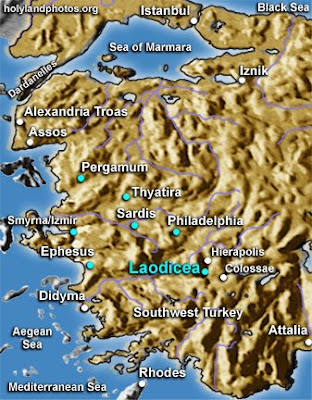 Congratulations to Kavya Shivashankar, the 13-year-old winner from Olathe, Kansas. Excellent job.
On a separate note, one of the earlier words in the finals was "brachyology," which sounds a lot like the word "bracketology" of which I have previously posted.
A brachyology is defined by reference.com as: a figure of speech that is an abbreviated expression. An example is the omission of "good" in "good morning."
Congratulations to Kavya Shivashankar, the 13-year-old winner from Olathe, Kansas. Excellent job.***
A brachyology is defined by reference.com as: a figure of speech that is an abbreviated expression. An example is the omission of "good" in "good morning."
Monday, April 20, 2009
Desperate Housewives Word Confusion
On last night's episode of Desperate Housewives the character Gabrielle (while talking about drinking cocktails) referred to an item that she called a "swivel stick." I had to hit the rewind button a couple of time to be sure I heard this correctly, and I'm afraid I did. I wonder if Eva Longoria misspoke or if the writers of the episode don't know that the small stick used to stir cocktails is called a "swizzle stick."
Monday, April 13, 2009
Therefor vs Therefore
An accidental therefor legitimately slipped past my spellcheck the other day. I meant to use therefore and, for whatever reason, missed typing the final "e." So what is the difference? Following are definitions from The Columbia Guide to Standard American English -
therefor: for or in return for that, for it - ex. I'll explain what we must do and the causes therefor.
therefore: consequently, hence, for that reason - ex. I don't have a key; therefore, I'll have to ring the bell.
therefor: for or in return for that, for it - ex. I'll explain what we must do and the causes therefor.
therefore: consequently, hence, for that reason - ex. I don't have a key; therefore, I'll have to ring the bell.
Tuesday, March 31, 2009
Save the Words - Adopt a Word - Ossifragant
I just adopted a word through a great new site from Oxford Dictionaries - http://savethewords.org/

Please join me in saving and promoting great words - http://savethewords.org/.
By the way, the definition of ossifragant is bone breaking.
(and beecher is one of my nicknames)
Wednesday, March 18, 2009
Unusual Word of the Day - Ergasiophobia
As yesterday was St. Patrick's Day, many people may be suffering from ergasiophobia today. And no, this phobia has nothing to do with the build up of gas in the body due to excessive consumption of green beer...Dictionary.com defines ergasiophobia as, "a fear of work of any kind."
Sports Word of the Day - Bracketology
I have been hearing the word bracketology in the news almost nonstop of late and my linguistic mind immediately thinks about bracketing paradoxes when I hear the word. I have posted about bracketing paradoxes a couple of times in the past but I have never posted about bracketology. For those who don't know, bracketology is defined by Reference.com as, "the process of predicting the field of the NCAA Basketball Tournament, named as such because it is commonly used to fill in tournament brackets for the postseason." A bracketologist, "places teams in the tournament in the various regions (East, West, Midwest, and South)."

Perhaps a person who notices bracketing paradoxes all the time should be called linguistic bracketologist.
Additionally, another newer sports word is NIT-ology which is defined as a process similar to that of bracketology that is used for the National Invitation Tournament.
Tuesday, February 24, 2009
The Many Senses of the Definition of Campus

The most familiar sense of the definition of campus is certainly that of college grounds. The original definition of the word campus, according to the Online Etymology Dictionary, is "a field," probably prop. "an expanse surrounded" (by woods, higher ground, etc.) from Latin. First used in college sense at Princeton."
Driving by our local hospital the other day started me to thinking about all the additional senses of the definition that are now used.
The Merriam-Webster Online Dictionary entry for campus is:
"1 : the grounds and buildings of a university, college, or school 2 : a university, college, or school viewed as an academic, social, or spiritual entity 3 : grounds that resemble a campus."
In addition to college, hospital, corporation and business campuses, it seems that the word campus can be used to describe the grounds of any set of buildings as long as the grounds are of a large enough size. Perhaps a minimum acreage should be included in the definition of campus.
Tuesday, February 10, 2009
Verbal Pandiculation

Pandiculation was a dictionary.com word of the day a few weeks back that I have been meaning to mention. Following is the definition:
pandiculation \pan-dik-yuh-LEY-shuhn\, noun:
an instinctive stretching, as on awakening or while yawning
by 1611 from French pandiculation from Latin pandiculari "to stretch oneself" and French suffix -ion.
"Pandiculate for Health! Grow Tall! Get Well! Be Young!" Exuberant ads like this, running in health-fad magazines since 1914, have proclaimed the virtues of a spine-stretching device called the "Pandiculator."-- Time, 1942-04-12
I really like the word, not only because it sounds cool, but also because I think it is a great word to use when describing blogs...after all, blogs really are a form of verbal pandiculation.
Subscribe to:
Posts (Atom)
